
NMN Done Right, Endurance by Design: The 1.2 g GO2MAX Routine—Mechanisms, Sinclair’s Research, and Real VO₂max Gains
All HTLT products featured here are available on my site — shop the collection. KETOADAM at checkout.
By Adam Szewc
Disclosure & attribution (read this first)
- HTLT did not conduct the NMN research discussed here and did not originate the underlying science.
- The GO2MAX formulation was allegedly informed by publicly available research on NAD⁺/NMN biology, including work by David Sinclair and Liao et al. This article does not claim any exclusive or proprietary association between those researchers and HTLT.
- I participate as an affiliate and personally use GO2MAX. Any dose recommendations here reflect my own experience and opinion—not HTLT’s medical guidance or a clinical standard.
- To keep this clear: my suggested protocol is 1.2 g NMN taken pre-cardio for what I’ve found to be the most efficacious effect on energy and session quality. Your mileage may vary.

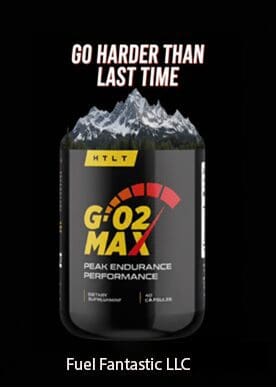
GO2MAX front bottle — shop now (code KETOADAM)
Why I wrote this
For the past two years I’ve been experimenting with nicotinamide mononucleotide (NMN) alongside structured endurance training focused on VO₂max and aerobic base. I used GO2MAX (an NMN supplement from HTLT) consistently. This post brings together (1) what current science suggests about NMN and energy metabolism, (2) how VO₂max and endurance adaptations tie in, and (3) how my own performance has evolved during this experiment.
What NMN is (in plain English)
NMN is a precursor the body can use to make NAD⁺, a molecule central to cellular energy production and mitochondrial function. As we age, NAD⁺ levels tend to decline. The hypothesis: supporting NAD⁺ may help cells keep up with energy demands and stress responses—potentially relevant for endurance performance and recovery.
Where David Sinclair’s work fits
Harvard researcher David Sinclair, PhD has published influential work on NAD⁺ biology and aging mechanisms, helping popularize interest in precursors like NMN (and broader sirtuin/NAD⁺ pathways). While the field continues to evolve and findings don’t equal endorsements of any particular brand or product, his lab’s contributions are widely cited in discussions of NAD⁺, sirtuins, mitochondria, and vascular function.
What Liao’s runner trial suggests about dose (up to 1.2 g)
The short version: In a 6-week, randomized, double-blind study of amateur runners by Liao and colleagues, NMN paired with identical training produced a dose-responsive rise in ventilatory threshold, while VO₂max didn’t significantly change. The biggest VT shift was at the 1.2 g/day dose.
- Why this matters: Higher VT = faster cruising at the same perceived effort—exactly what I felt (lighter mileage, quicker pace).
- Training fit: Benefits showed when NMN was combined with structured training. I take 1.2 g pre-cardio before VO₂/quality sessions in a high-volume week.
- Expectations: Think threshold/durability first, not instant VO₂max jumps—mirrors my best weeks (~80 miles, ~23k ft vert).
Reference: Liao B. et al., 2021, randomized, double-blind, dose-response NMN trial in amateur runners.
My protocol (the n=1)
- Product: GO2MAX (HTLT).
- Personal dose & timing (affiliate recommendation): 1.2 g NMN taken pre-cardio (single dose before the main aerobic/VO₂ session).
- Diet & electrolytes: I follow a ketogenic diet and supplement electrolytes using Redmond Real Salt; hydration stays high on training days.
- Training pairing: VO₂max intervals 1–2×/week + real Zone 2 volume + strides; progressive long runs.
My regimen, not a prescription. Individual responses, health status, and drug/supp interactions matter.
What I noticed (field notes)
- Mileage moved from heavy to handy: Peak 80-mile weeks without late-run fade.
- Vert felt less vertical: Up to 23,000 ft in a week felt smoother, steadier breathing.
- Trails leveled up across the board: Cleaner footwork and pop on technical terrain.
- Pace got quicker: Same aerobic feel, faster splits.

Supplement Facts — clarity on what’s in the bottle
About GO2MAX in this context
I chose GO2MAX as my NMN source during this experiment for consistency. This is not an endorsement of any specific brand as “best”; the goal was to reduce variables while tracking training over time. Again, HTLT did not perform the foundational NMN research; the product was reportedly developed referencing public literature (e.g., Sinclair, Liao) and general NAD⁺/NMN mechanisms.
Practical takeaways
- Nail sleep, fueling, and progressive load before layering supplements.
- If you test NMN, standardize your protocol and log objectively.
- Consider 1.2 g pre-cardio only if appropriate; consult your clinician.
- Periodize: VO₂max 1–2×/week + lots of true easy miles.
- Re-evaluate every 8–12 weeks for trend improvements.
Where to buy + discount
All HTLT supplements—including GO2MAX—are available on my website. Use code KETOADAM at checkout.
Affiliate disclosure: purchases via my links may earn a commission at no extra cost to you.
References
- Liao B, et al. Journal of the International Society of Sports Nutrition (2021).
- Igarashi M, et al. npj Aging (2022).
- Yi L, et al. GeroScience (2023).
- Morifuji M, et al. RCT in older adults (2024).
- Wen J, et al. Cureus (2024).
- Zhang J, et al. Critical Reviews in Food Science and Nutrition (2024).
- Yaku K, et al. Antioxidants & Redox Signaling (2023).
- Iqbal T, et al. BBA – General Subjects (2024).