
The 25–40% Revolution: Why Flat Runners and Athletes Running 12–15% Vert Never Adapt and Always Fail on Real Terrain
Runners have been misled for decades. They’ve been told incline work above 12–15% is excessive, unnecessary, or even harmful.
That myth didn’t survive the Smoky Mountains.
In just 6 days of training in the Smokies in 2025, I completed 78.20 miles and 20,945 feet of vertical gain—with zero soreness, zero rest days, and zero breakdown. Not because I’m superhuman, but because I trained in a physiological range most runners never touch:
25–40% incline.
10 Scientific Reasons Why 12–15% Isn’t Enough
- Mitochondrial Density Ceiling — Steep gradients (>20%) activate PGC-1α and mitochondrial biogenesis at significantly higher levels than moderate inclines, increasing endurance capacity at the cellular level (Bishop et al., 2019; Vernillo et al., 2017).
- Posterior Chain Dominance — EMG studies show hip extensor recruitment increases up to 300% when incline exceeds 20%, shifting propulsion from quads to glutes and hamstrings—something flat running never achieves (Swanson & Caldwell, 2000).
- Minimal Impact Loading — Steep uphill locomotion eliminates braking forces and drastically reduces eccentric loading, protecting joints and connective tissues (Giandolini et al., 2013).
- Threshold Expansion Without Velocity Risk — High gradient improves lactate clearance and ventilatory threshold without the sprint speeds that predispose flat runners to hamstring injuries (Townshend et al., 2010).
- Fat Utilization Over Carbohydrate Dependency — Incline intensity promotes β-oxidation and NAD⁺-dependent mitochondrial pathways, creating durable metabolic flexibility (Mills et al., 2016).
- Enhanced Stroke Volume — Cardiac afterload during incline promotes ventricular expansion and stroke volume gains without sprint-induced trauma (Saunders et al., 2004).
- Neuromechanical Engagement — High incline eliminates autopilot running, requiring continuous proprioception and motor pattern refinement—true movement intelligence (Vernillo et al., 2017).
- Altitude-Like Adaptations — Oxygen kinetics and ventilation demands mimic hypoxic stress responses, improving aerobic efficiency without going to altitude (Minetti et al., 2002).
- Continuous Concentric Tension — Unlike flat running, incline eliminates eccentric damage and maintains productive muscular tension for hypertrophy-adjacent endurance (Millet et al., 2012).
- Recovery Advantage — With low eccentric cost and high concentric output, incline allows consecutive high-volume days without soreness debt—flat runners cannot replicate this (Giandolini et al., 2013).
Why 20–40% Is a Human Performance Superzone
- Optimal Force Vectoring — At 25–40%, the direction of force aligns with gravitational resistance, maximizing mechanical efficiency for uphill locomotion (Minetti et al., 2002).
- Fiber-Type Remodeling — Repeated steep incline training converts Type IIa fibers toward oxidative profiles while enhancing Type I mitochondrial efficiency (Bishop et al., 2019).
- Improved Running Economy — Incline modifies stride mechanics and reduces overstride patterns that destroy economy on flat surfaces (Vernillo et al., 2017).
- Ankle & Foot Armor — Increased dorsiflexion and midfoot loading fortify stabilizers crucial for technical terrain competency (Giandolini et al., 2013).
- Cadence Precision — Steep gradients force short, efficient strides, eliminating wasted motion and overstriding—perfect form developed under necessity, not coaching theory.
- Capillary Proliferation — Chronic incline stress stimulates angiogenesis, improving oxygen diffusion and nutrient delivery to working tissues (Saunders et al., 2004).
- Load-Based Durability — The musculoskeletal system adapts to continuous tension without eccentric microtrauma, allowing volume accumulation impossible for flat runners.
- Ego Removal — Gradient eliminates pace comparison and restores effort-based training—the only metric that matters on real terrain.
- Cardiac Hydraulic Scaling — Increased afterload improves end-diastolic volume and myocardial contractility—true cardiovascular evolution.
- Effort Mastery — The gradient teaches athletes to control intensity without pace addiction, making flat running feel trivial afterward.
Where GO2MAX Fits In
Most runners don’t fail because their legs quit—they fail because their cells do. High-incline work demands mitochondrial support, oxygen efficiency, and lactate utilization. For over two years, I’ve taken 1.2g NMN via GO2MAX 45–60 minutes before incline training. The result?
- Output holds deeper into climbs
- Effort perception drops
- Recovery doesn’t require rest days
- Vertical volume no longer causes collapse
Learn more here: Fuel Fantastic Training Supplements
Use code KETOADAM for 15% off
The Smokies: Six Days of Proof
| Day | Miles | Vertical Gain |
|---|---|---|
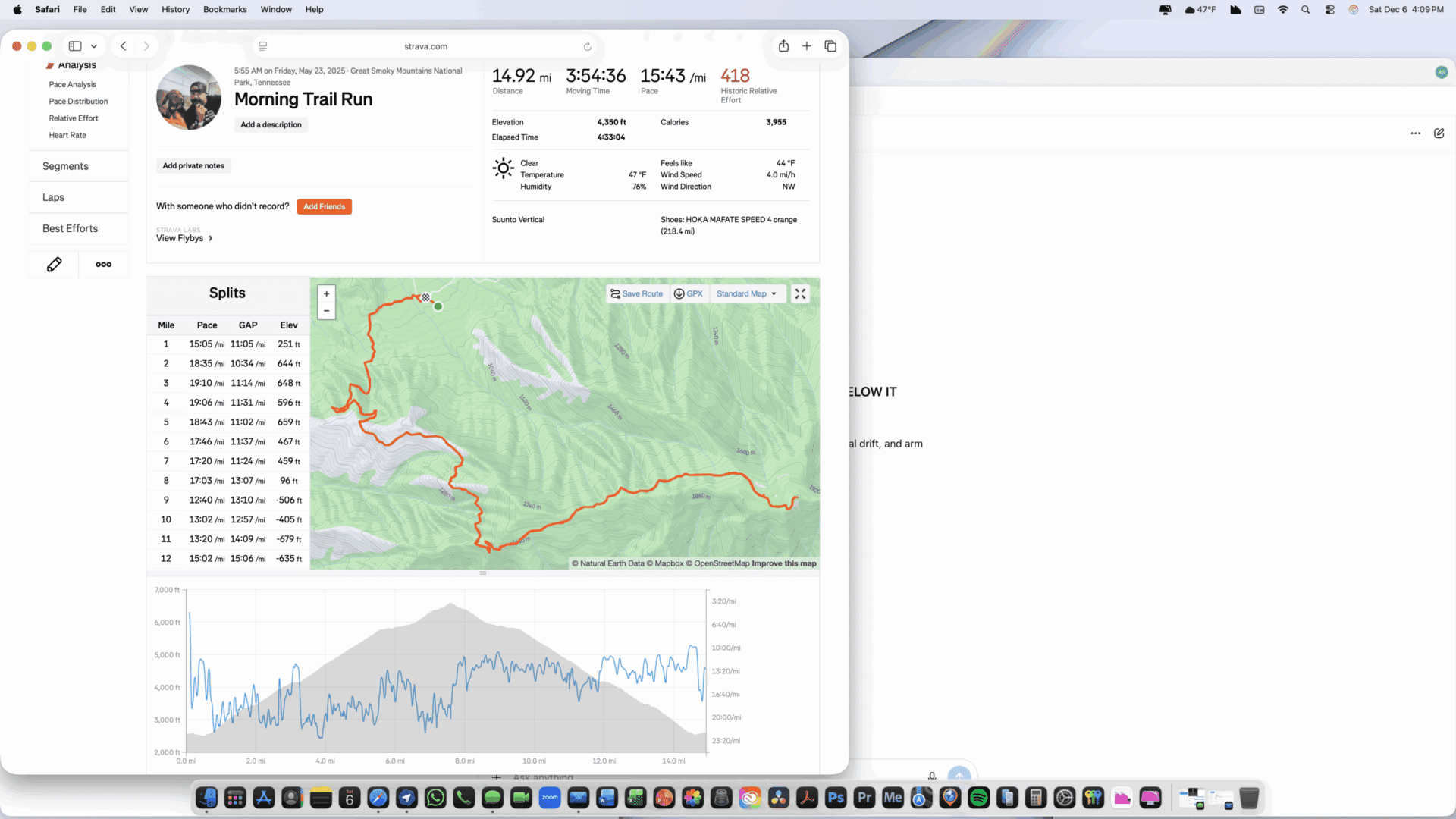
| Day 1 | 14.92 | 4,350 ft |
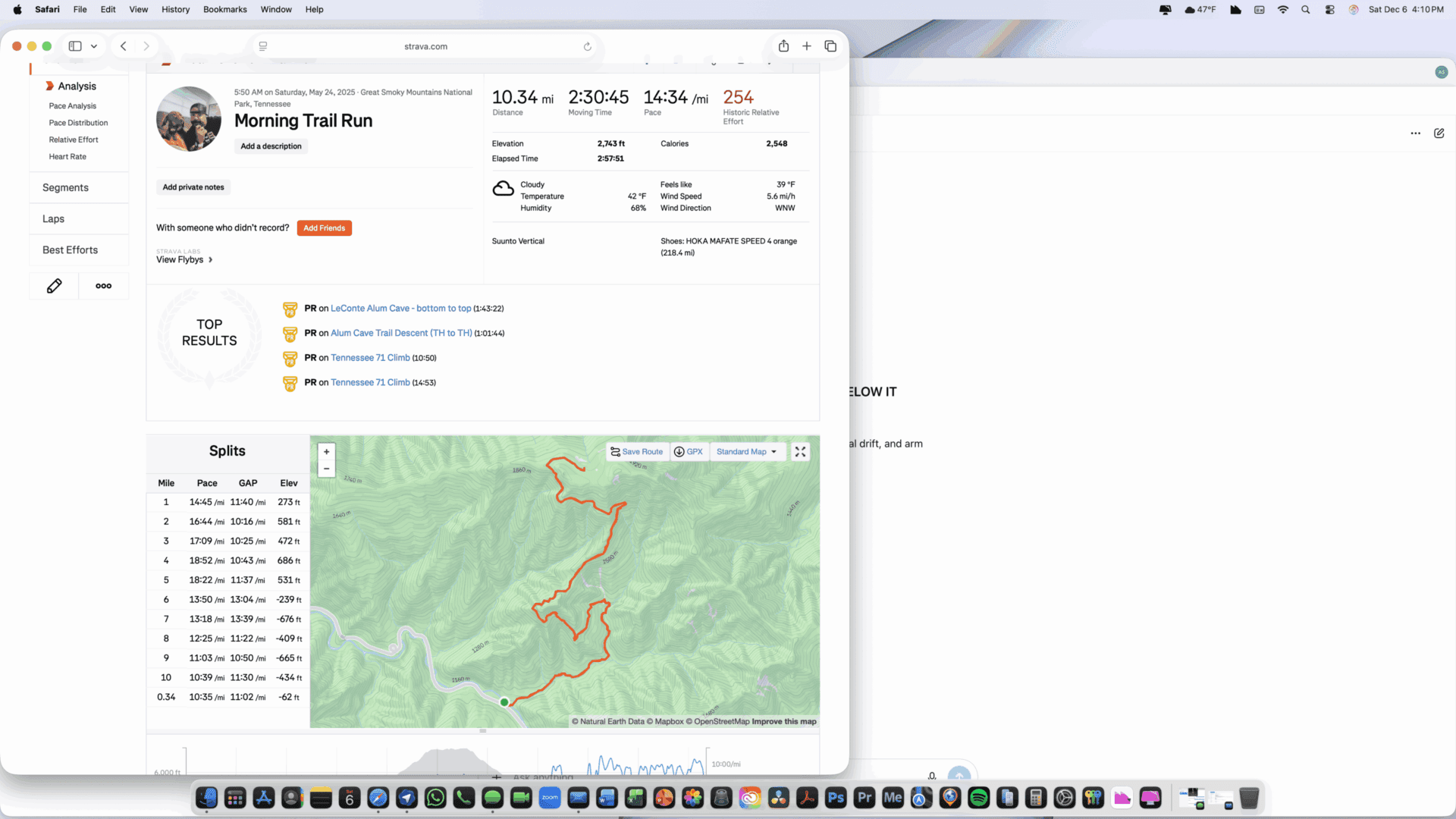
| Day 2 | 10.34 | 2,743 ft |
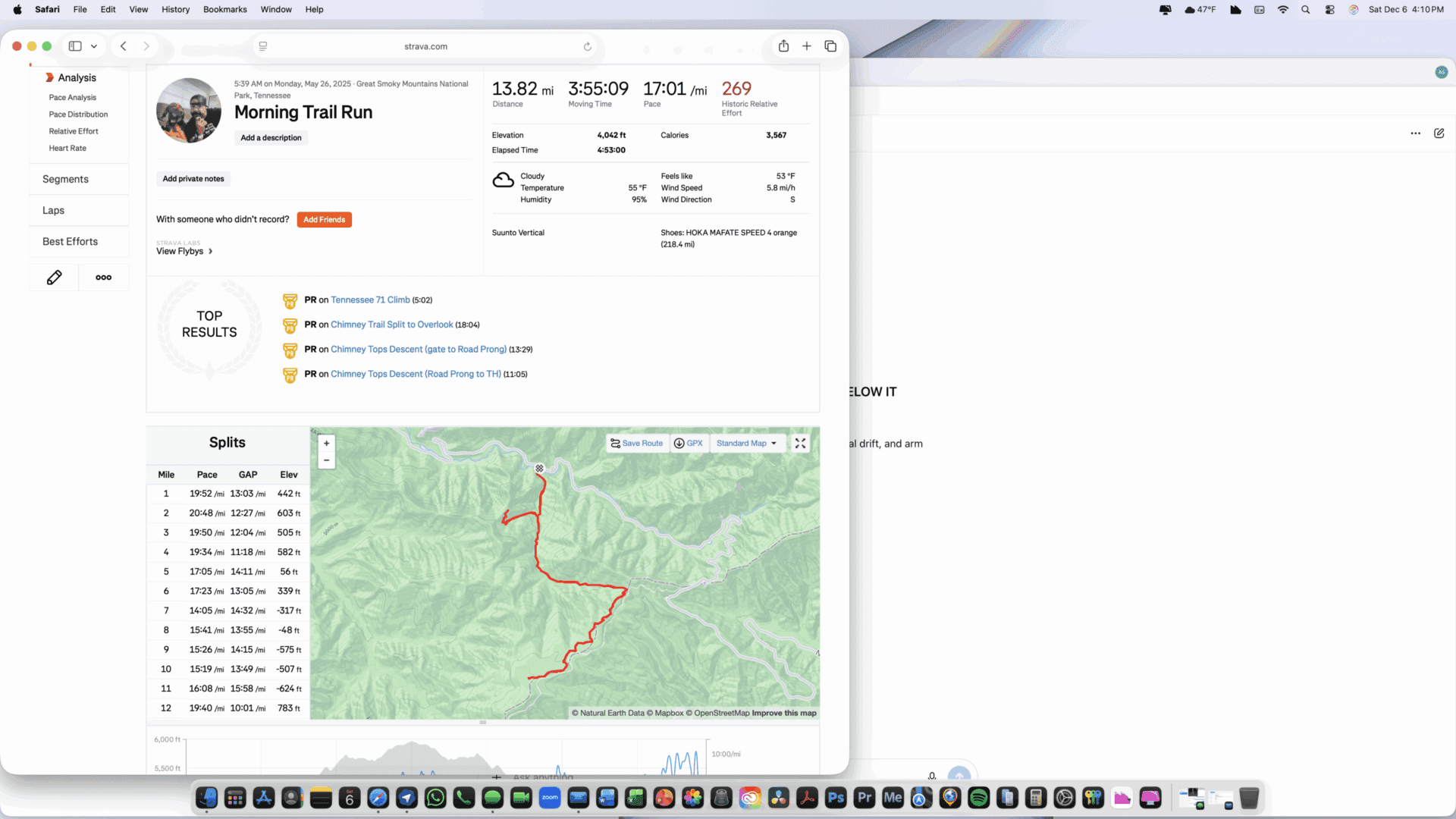
| Day 3 | 13.82 | 4,042 ft |
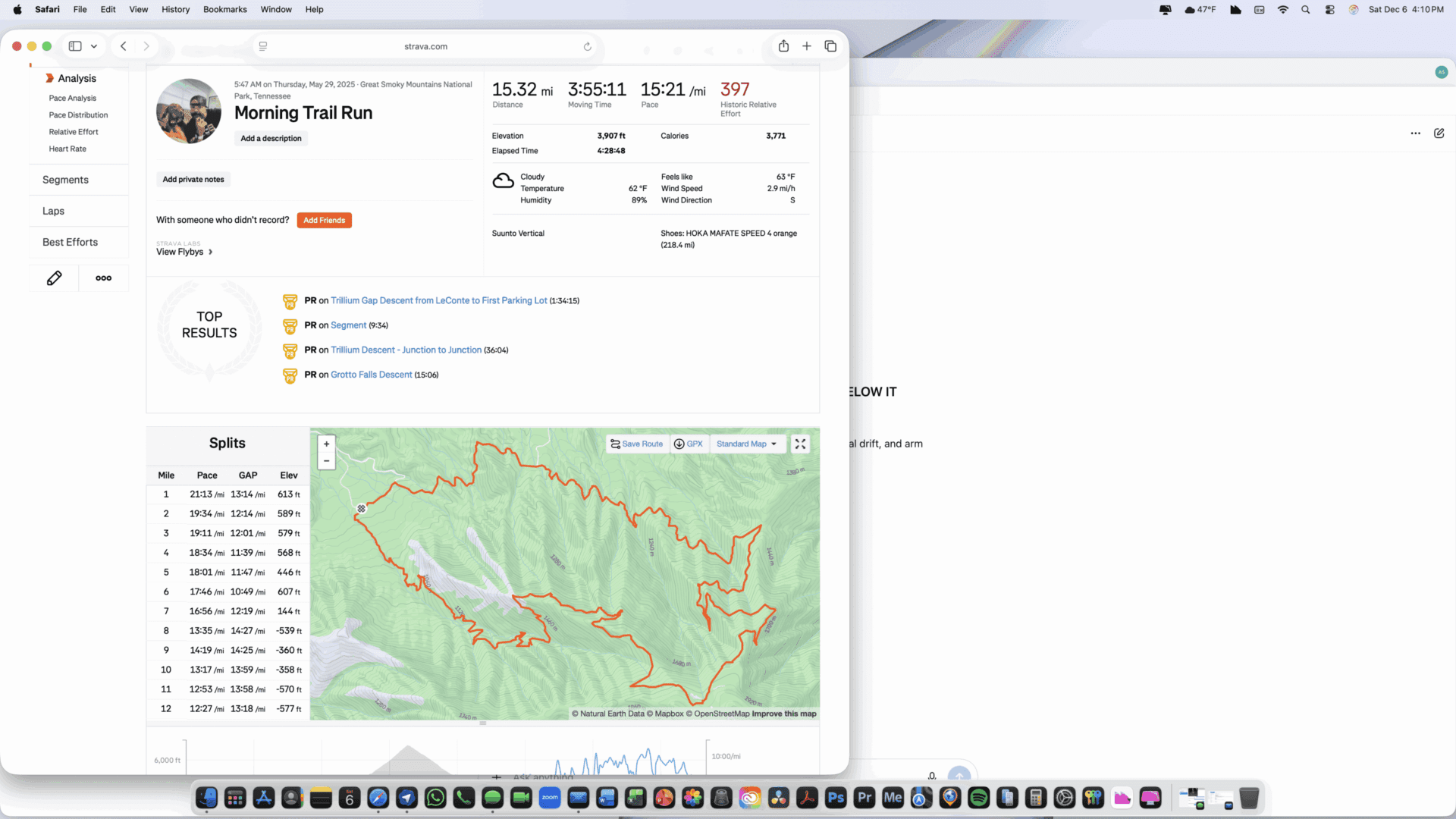
| Day 4 | 15.32 | 3,907 ft |
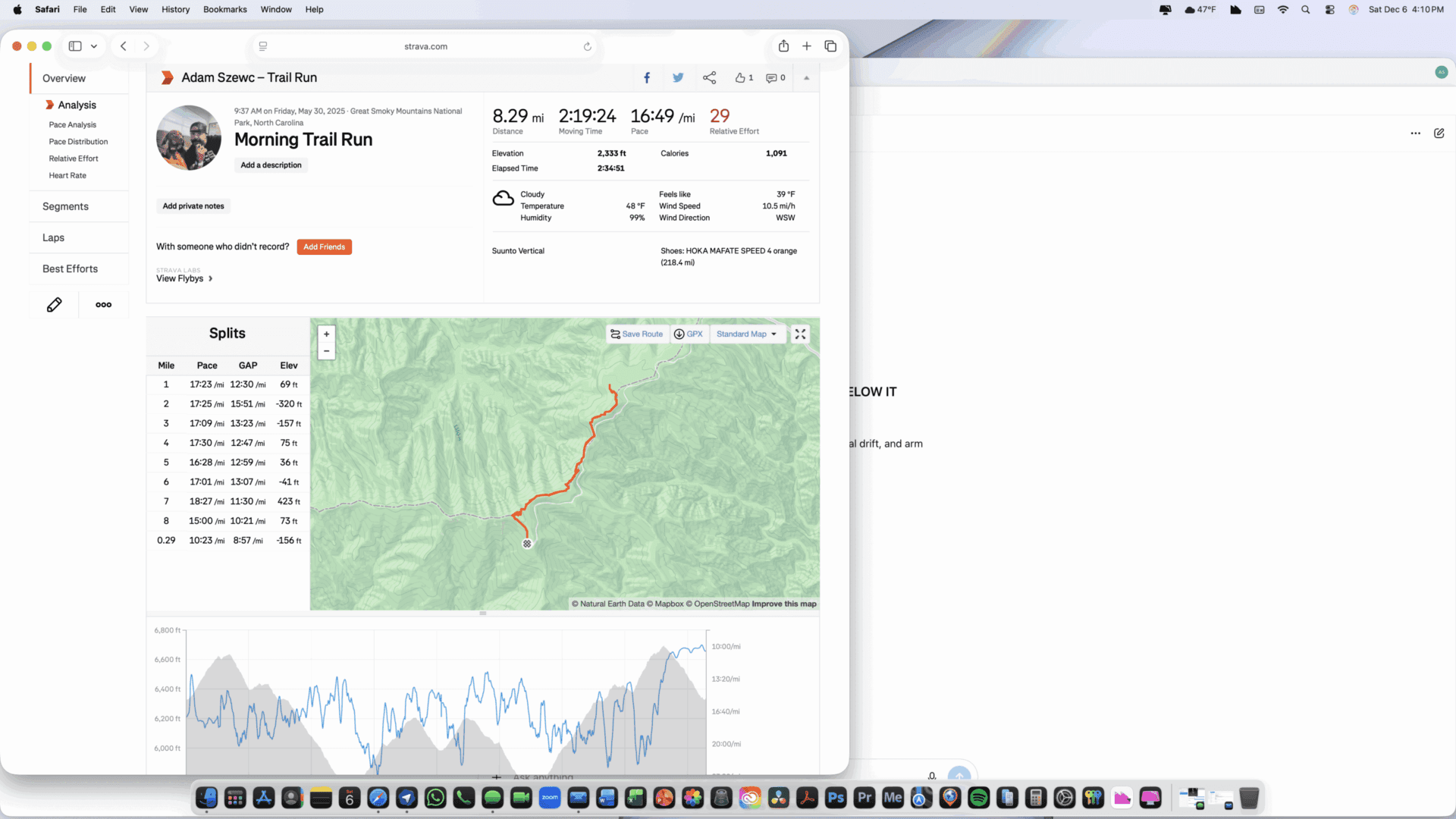
| Day 5 | 8.29 | 2,333 ft |
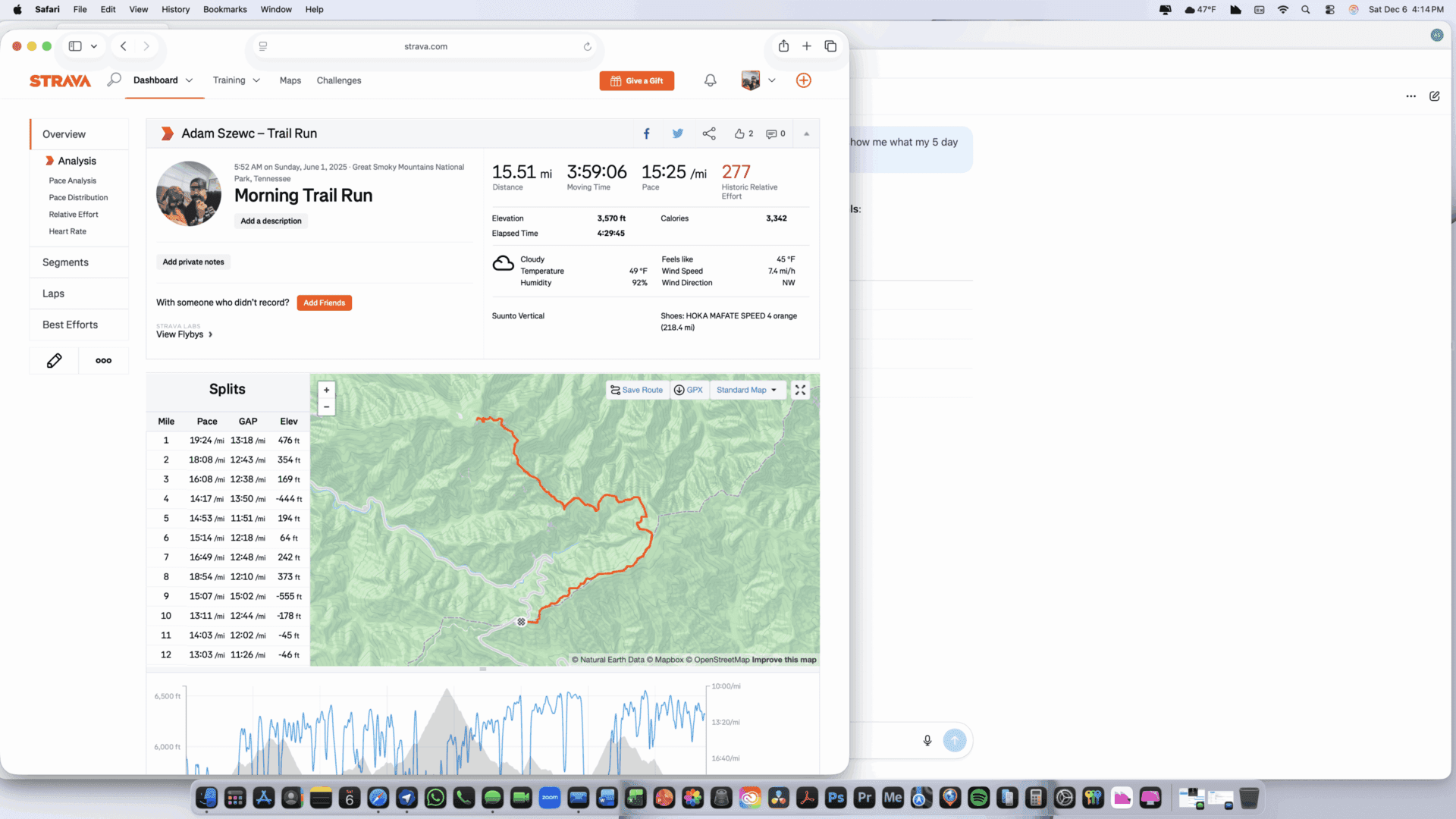
| Day 6 | 15.51 | 3,570 ft |
| Total | 78.20 miles | 20,945 ft |
Featured Runs (Highest Vertical Days)
Day 1 – 14.92 miles / 4,350 ft
Day 3 – 13.82 miles / 4,042 ft
Four Additional Smokies Runs
The Final Truth
Flat running builds numbers. Steep incline builds humans.
If you stay under 15%, you remain who you are. If you cross 20%, you return someone else.
The incline isn’t an option. It’s an unlock.